**This is an old revision of the document!**
Life Cycle Analysis
Life Cycle Analysis (LCA) is a method that assesses the environmental impacts of products or systems. It is the recommended method for environmental display at the European level and standardized at the international level. This method is largely used because of its 3 main characteristics :
- Functional : The object of study is defined by the function it fulfills. This allows a comparison between different solutions in order to choose the best one
- Multi-criteria : Several environmental indicators are taken into account during the study. They include global warming potential, contribution to the depletion of abiotic and fossil resources, or the contribution of ionizing radiation. These indicators are among the main contributors to the impacts of digital technology.
- Life-cycle approach : The impacts generated during all life cycle stages of the studied object are considered :
- Extraction of raw materials : A lot of energy, chemicals and water are needed to extract materials from the earth and refine them. Furthermore, the concerned resources are limited and are getting rarer, thus it will be more and more difficult to extract them.
- Manufacturing : During manufacturing, the raw materials are transformed into digital components and equipment. This consumes a lot of water and energy.
- Distribution : Distribution represents the transport of the digital components from their place of fabrication to their place of use, mainly from Asia to Europe for IT equipment.
- Use : The use of digital devices represents the energy consumed whilst using them.
- End-of-life : This step concerns the disposal of the devices, either recycled, buried or burnt.
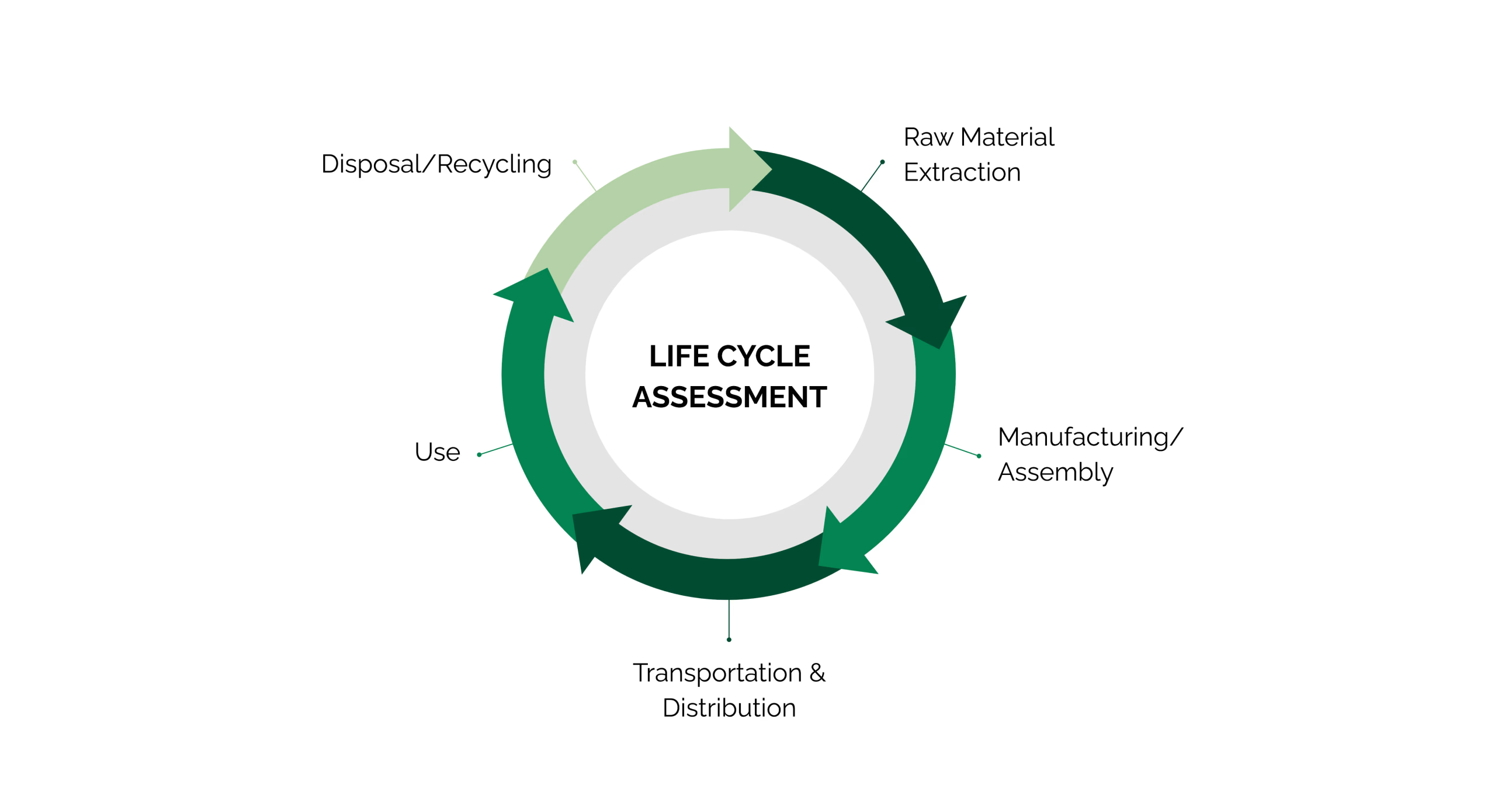
The LCA methodology is defined by ISO standards, in particular, ISO 14040 1) and ISO 14044 2). Standard ISO 14040 describes the main principles of an LCA and is fairly general. Standard ISO 14044 sets out the requirements and guidelines in greater detail.
LCA for Naknow
The LCA methodologies defined in ISO 14040 and 14044 are designed for general use. This is why there are many different LCA methods that comply with these standards. For Naknow, we chose the PEF 3.0 method and its 16 environmental indicators. According to ADEME 3), the six most important are:
| Indicator name | Acronym | Unit | Indicator type | Description |
|---|---|---|---|---|
| Resources depletion, minerals and metals | ADPe | kg Sb eq. | Impact, problem oriented | Industrial exploitation leads to a reduction in available resources, whose reserves are limited. This indicator measures the quantity of mineral and metal resources extracted from nature as if they were antimony. |
| Acidification potential | AP | mol H+ eq. | Impact, problem oriented | Air acidification is linked to emissions of nitrogen oxides, sulfur oxides, ammonia and hydrochloric acid. These pollutants turn to acid in the presence of moisture, and their fallout can damage ecosystems and buildings alike. |
| Global warming potential | GWP | kg CO2 eq. | Impact, problem oriented | Greenhouse gases (GHGs) are gaseous compounds that absorb infrared radiation emitted by the Earth's surface. Increasing their concentration in the Earth's atmosphere contributes to global warming. |
| Ionizing radiations | IR | kBq U235 eq. | Impact, problem oriented | Radionuclides can be released through a variety of human activities. When radionuclides decay, they release ionizing radiation. Human exposure to ionizing radiation causes DNA damage, which in turn can lead to various types of cancer and birth defects. |
| Particulate matter | PM | disease occurrence | Impact, problem oriented | The presence of small-diameter fine particles in the air - particularly those with a diameter of less than 10 microns - represents a human health problem, as their inhalation can cause respiratory and cardiovascular problems. |
| Total primary energy | TPE | MJ | Flux | Primary energy is the first form of energy directly available in nature before any transformation: wood, coal, natural gas, oil, wind, solar radiation, hydraulic or geothermal energy, etc. |